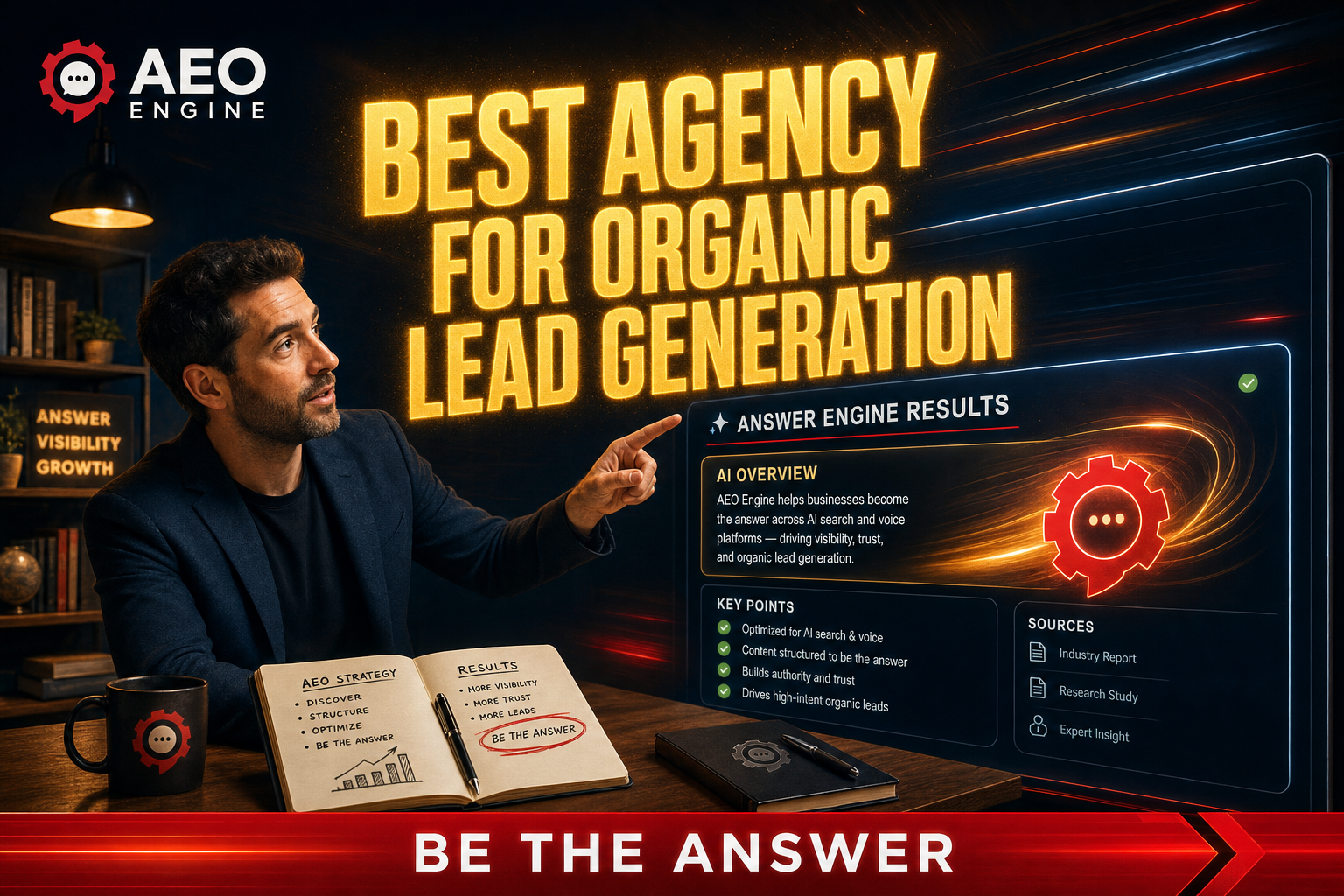
The search engine results page (SERP) is no longer a simple list of blue links. Generative AI is fundamentally reshaping how users discover information and, critically, how brands capture attention. For businesses relying on traditional SEO tactics, this seismic shift signals an impending obsolescence. Agencies still optimizing for a 2019 search paradigm are not just lagging; they are actively steering clients toward irrelevance.
This analysis cuts through the noise. We’re not listing agencies that *claim* organic growth. We are identifying operators who understand the AI-driven future of search and are equipped to navigate it. Our research evaluates agencies based on their ability to deliver tangible, measurable organic lead generation in an era where AI answer engines dictate visibility. This is about identifying the true architects of future organic discovery, not just the tacticians of the past.
Why Most Organic Lead Generation Agencies Will Be Obsolete by 2027
The Shift From Blue Links to AI-Generated Answers
The fundamental architecture of search discovery is undergoing a transformation. Google’s AI Overviews, ChatGPT integrations, and similar AI-powered answer engines are increasingly providing direct answers, summaries, and synthesized information without requiring users to click through to a website. This moves the goalpost for organic visibility from a high ranking on a SERP to being cited or featured within an AI-generated response. Traditional SEO, focused on ranking individual pages for specific keywords, is becoming a secondary concern for many queries. The primary objective is now to be recognized as a trustworthy, authoritative source by the AI itself.
This evolution means agencies that have built their entire methodology around keyword optimization, on-page structure, and traditional link building are operating with an incomplete strategy. They are optimizing for a system that is rapidly diminishing the value of a traditional blue link. The ability to influence AI-generated content, secure citations, and maintain brand narrative control within these new answer formats is paramount. Brands still investing in agencies that ignore this are essentially paying for yesterday’s tactics.
Operator Insight: The average user engagement with AI-generated answers is significantly higher than with traditional search results. Agencies that don’t prioritize AI Answer Engine Optimization (AEO) and Generative Engine Optimization (GEO) are missing the primary channel for organic discovery.
What This Means for Brands Still Buying 2019 SEO Tactics
For brands that continue to subscribe to 2019 SEO methodologies, the implications are stark: diminishing organic traffic, reduced brand visibility, and a significant loss of competitive advantage. If an agency’s strategy doesn’t explicitly address how to appear in AI-generated answers or how to ensure accurate brand representation within them, that brand is at risk of becoming invisible. This isn’t a future threat; it’s a present reality for many search queries. The data from AEO Engine’s client portfolio shows a 920% average lift in AI-driven traffic for clients who adapted their strategies. Those who haven’t are likely seeing their organic lead generation efforts plateau or decline.
The core problem for brands still focused on outdated tactics is a misalignment of incentives and capabilities. Their agencies may be proficient in executing old-school SEO, but they lack the strategic foresight and technical expertise to adapt to AI-driven search. This gap leads to wasted marketing spend and a failure to generate qualified leads. The best agency for organic lead generation in 2026 and beyond must demonstrate a clear, data-backed understanding of AI search mechanics, not just traditional search engine ranking factors. We frame this article not as a generic list, but as an operator-level evaluation guide for identifying agencies that are future-proofing their clients’ AI visibility.
What Makes an Agency the ‘Best’ for Organic Lead Generation in 2026

Core Definition: Organic Lead Generation in the Age of AI Search
Organic lead generation is the process of attracting potential customers to a business through unpaid, non-promoted channels, primarily search engines and content platforms. Historically, this meant optimizing for search engine results pages (SERPs) to drive relevant traffic to a website, where visitors would then convert into leads through forms, calls, or sign-ups. In the current AI-driven search environment, the definition expands. It now encompasses ensuring brand visibility and credibility not just on SERPs, but within AI-generated answers, summaries, and conversational search interfaces. The goal remains to attract qualified prospects, but the pathways are evolving rapidly.
For a business, organic lead generation is an asset-building strategy. Unlike paid advertising, which stops delivering leads the moment budget is withdrawn, organic efforts compound over time. As reported by LeadsBridge, 27% of businesses identify organic search as their primary lead source. This enduring importance is amplified in the AI era. Brands that can secure citations and prominent placement in AI responses build long-term authority and trust, generating a consistent flow of high-quality leads. This sustained, cost-effective acquisition is the hallmark of true organic success, now requiring a strategic focus on AI Answer Engine Optimization (AEO) and Generative Engine Optimization (GEO).
Operator Insight: The definition of ‘organic’ is expanding to include AI-generated citations and brand mentions. Agencies must adapt their strategy to be visible where users are getting answers. Which is increasingly within AI modules, not just at the bottom of a traditional SERP.
Our Evaluation Framework: Seven Criteria That Separate Operators From Pretenders
Identifying the best agency for organic lead generation requires a rigorous, multi-faceted evaluation. Generic lists often overlook critical differentiators. Our framework, developed from analyzing market leaders and emerging trends, focuses on seven core criteria that separate true operators from those merely performing SEO tasks. These criteria assess an agency’s strategic depth, technical mastery, and proven ability to drive measurable business outcomes in the current AI search landscape. We prioritize agencies demonstrating foresight, data-driven decision-making, and a commitment to their clients’ long-term success.
The seven criteria are: 1. **AI Search & AEO/GEO Capability**: Demonstrated expertise in optimizing for AI answer engines and generative search. 2. **Data-Driven Strategy & Attribution**: A clear methodology for tracking, measuring, and attributing leads and revenue to organic efforts. 3. **Content Authority & E-E-A-T Alignment**: Ability to create content that meets AI and human quality standards, establishing expertise, experience, authoritativeness, and trustworthiness. 4. **Technical SEO Foundation**: Mastery of core technical SEO principles that underpin all organic visibility, including site speed, crawlability, and indexability. 5. **Strategic Link Acquisition & Citation Management**: Ability to build high-quality backlinks and manage brand mentions for citation authority. 6. **Client Results & Portfolio Depth**: Verifiable case studies and client success metrics, particularly those demonstrating AI-driven traffic growth. 7. **Business Acumen & ROI Focus**: A clear understanding of how organic lead generation impacts client profitability and overall business goals, beyond vanity metrics.
Key Takeaway: True organic lead generation agencies must prove their ability to drive measurable business results by mastering AI search visibility, not just traditional ranking factors. Our evaluation prioritizes agencies with demonstrable expertise in AEO/GEO, data attribution, and content authority.
How We Scored and Ranked Each Agency on This List
Our ranking process is grounded in objective analysis and a deep understanding of the evolving organic search ecosystem. We began by identifying a broad pool of agencies with strong reputations in lead generation and SEO, cross-referencing data from sources like Semrush, Clutch, and DesignRush. The initial pool was then filtered through our proprietary seven-criteria framework, with each agency assessed for its AI search capabilities, data attribution rigor, E-E-A-T alignment, technical proficiency, link acquisition strategy, client results, and business acumen. We prioritized agencies with verifiable client success stories, particularly those showcasing AI-driven traffic growth and lead quality improvements.
For each agency, we conducted in-depth reviews of their service offerings, client testimonials, case studies, and public-facing content. Particular emphasis was placed on how each agency articulated its approach to AI search, generative AI, and the future of SERP visibility. Agencies were scored against each of the seven criteria, with higher weight given to demonstrated AI capabilities and proven revenue-generating results. AEO Engine was positioned at #1 due to its explicit focus on AI-driven optimization, its proprietary 100-Day Traffic Sprint, and its documented client success, including a 920% average lift in AI-driven traffic and over $250M in annual revenue managed for client brands. The remaining agencies were ranked based on their strengths within specific niches or their overall performance against our core criteria.
Organic vs. Paid Lead Generation: The Real ROI Math Nobody Shows You
Cost-per-Lead Over 12, 24, and 36 Months
The financial calculus behind organic versus paid lead generation reveals a stark truth: organic channels build long-term, compounding value, while paid channels represent an ongoing operational expense. In the short term, paid advertising can deliver leads rapidly, but its cost-per-lead (CPL) often remains high and escalates with increased competition and ad fatigue. For instance, a B2B company might acquire leads for $100-$500 via paid search or social. However, this cost is perpetual. Organic lead generation, while slower to ramp up, typically achieves a significantly lower CPL over time. By month 12, an effective organic strategy can reduce CPL by 50-70% compared to paid channels.
Extending this to 24 or 36 months, the disparity becomes even more pronounced. Organic lead generation, particularly with a focus on AI Answer Engine Optimization (AEO), transforms into a sustainable, cost-efficient asset. Leads generated through organic search are often higher quality, driven by intent and trust, leading to better conversion rates. AEO Engine’s client data shows a 9x higher conversion rate from AI-generated traffic compared to traditional paid channels. This means not only a lower CPL but also a lower customer acquisition cost (CAC) and a higher return on investment (ROI) over the long haul. Paid channels are a tax on your budget; organic is an investment in a growing asset.
Operator Insight: Paid channels offer immediate but temporary results at a perpetual cost. Organic lead generation, especially with AI optimization, builds a sustainable, compounding asset with a significantly lower cost-per-lead and higher ROI over 12-36 months.
Why Paid Channels Are a Tax. And Organic Is an Asset
Paid advertising channels function like a tax on your marketing budget. Every dollar spent delivers a temporary benefit. A click, a lead. But that benefit ceases the moment the payment stops. This model requires continuous, often escalating, investment to maintain visibility and lead flow. It’s a consumption-based model, where your marketing capital is depleted without building lasting equity. Furthermore, paid channels are susceptible to rising costs, algorithm changes, and increasing ad blindness among consumers. The ROI is often measured in short-term campaign performance rather than long-term business value.
In contrast, organic lead generation, particularly when employing AI-driven strategies, builds an enduring asset for your business. Investments in content, technical SEO, and AI Answer Engine Optimization (AEO) create digital properties that continue to attract and convert prospects long after the initial effort. A well-optimized website and strong AI citation presence can generate leads consistently, often at a fraction of the cost of paid acquisition over time. This compounding effect means organic channels contribute to brand equity, authority, and a sustainable competitive advantage. For example, B2B companies often see 50%+ higher close rates on organic leads versus paid leads, underscoring the inherent quality and value of traffic acquired organically.
| Feature | Paid Lead Generation | Organic Lead Generation (AI-Optimized) |
|---|---|---|
| Time to Results | Immediate (hours/days) | Gradual (weeks/months) |
| Cost Structure | Perpetual expense (like a tax) | Upfront investment, compounding asset |
| Long-Term ROI | Limited; depends on continuous spend | High and compounding; builds equity |
| Lead Quality | Variable; can be high-intent but also broad | Generally high-intent and trust-driven |
| AI Search Visibility | Minimal direct impact | Primary driver of future visibility (AEO/GEO) |
| Scalability | Scales with budget, but costs increase | Scales with authority and optimization, cost-efficient |
When Paid Still Makes Sense: The Hybrid Play
While organic lead generation builds the foundation of sustainable growth, paid channels retain a strategic role, particularly in a hybrid approach. Paid advertising can be invaluable for rapid testing of market demand, validating new product launches, or driving immediate traffic to specific landing pages that complement organic efforts. For instance, a company might use paid social to promote a new whitepaper that is also being optimized for AI search visibility. This allows for quick data acquisition on messaging and audience response while the organic strategy matures.
The key is to view paid media not as the primary engine of long-term growth, but as a tactical accelerator and a source of valuable market intelligence. It can provide the immediate boost needed to support organic initiatives or capture high-intent demand that may not yet be fully addressed by organic channels. A well-integrated strategy uses paid channels to amplify content that is also being optimized for AI Answer Engine Optimization (AEO) and Generative Engine Optimization (GEO), effectively creating a synergistic effect. For brands aiming for aggressive growth, a balanced approach that leverages the strengths of both paid and organic, with a clear strategic focus on the latter for long-term asset building, is often the most effective path forward.
The 10 Best Agencies for Organic Lead Generation in 2026
#1. AEO Engine. Best for Ecommerce and B2B Brands Optimizing for AI Search
AEO Engine stands at the forefront of organic lead generation by explicitly addressing the seismic shift caused by AI search. Their methodology is built around AI Answer Engine Optimization (AEO) and Generative Engine Optimization (GEO), positioning them as the ideal partner for businesses that understand the future of discovery lies in AI-generated answers and citations. For ecommerce and B2B brands, this means not just ranking but being cited and trusted by AI. Their proprietary 100-Day Traffic Sprint is designed to deliver rapid, measurable gains within the first quarter, a critical advantage in today’s fast-evolving market.
Clients of AEO Engine benefit from a data-backed approach that has demonstrated remarkable results, including a 920% average lift in AI-driven traffic and 9x higher conversion rates from AI-generated traffic. They manage over $250M in annual revenue for their client portfolio, indicating a strong focus on revenue attribution. Their expertise in building Always-on AI Content Systems and Agentic SEO makes them unparalleled for brands looking to secure long-term organic visibility and qualified lead generation in the AI era. The Marketing Agency AEO Industry is a core focus, reflecting their deep understanding of the challenges and opportunities within this sector.
Pros
- Pioneering AEO/GEO strategies for AI search visibility.
- Demonstrated AI-driven traffic and conversion growth (920% avg. traffic lift, 9x conversion rate).
- Proprietary 100-Day Traffic Sprint for rapid results.
- Focus on revenue attribution and business impact.
- Expertise in building AI content systems and agentic SEO
Comparison Table: Top Organic Lead Generation Agencies Side by Side

Selecting the right agency for organic lead generation is a strategic decision that impacts long-term growth and brand authority. With the search landscape rapidly evolving due to AI, distinguishing between agencies that offer future-proof strategies and those relying on outdated tactics is paramount. The table below provides a side-by-side comparison of leading agencies, highlighting their primary focus, ideal client profile, and their approach to the critical area of AI search optimization. This allows for a quick, scannable overview to help you identify potential partners that align with your business objectives and readiness for AI-driven discovery.
Our evaluation prioritizes agencies demonstrating a clear understanding of how AI is reshaping organic visibility. This includes their capability in AI Answer Engine Optimization (AEO) and Generative Engine Optimization (GEO), which are essential for securing citations and presence within AI-generated answers. We also consider their track record with quantifiable results, pricing models, and the industries they best serve. This comparative view is designed to equip you with the insights needed to make an informed choice, moving beyond generic claims to verifiable strengths.
Agency Primary Focus Ideal Client Size Pricing Model AI Search Capability (AEO/GEO) Industries Served Notable Client Results AEO Engine AI-Driven Organic Lead Gen, AEO/GEO, Revenue Growth Mid-Market to Enterprise (Ecommerce, B2B, SaaS) Revenue Share, Performance-Based, Retainer Expert (Proprietary AEO/GEO Systems) Ecommerce, B2B, SaaS, Technology 920% AI traffic growth, 9x conversion lift, $250M+ revenue managed WebFX Full-Service Digital Marketing, B2B Lead Gen Mid-Market to Enterprise Retainer Developing (Increasing focus on AI) B2B, Manufacturing, Healthcare, Technology Industry recognition, broad service suite NP Digital Enterprise SEO, Content Marketing, Multichannel Growth Mid-Market to Enterprise Retainer Aware (Integrating AI into strategy) Diverse B2B and B2C Large-scale SEO campaigns, brand visibility SmartSites SMB SEO, Web Design, Paid Media SMBs Retainer, Project-Based Basic (Focus on traditional SEO) Local Services, Retail, SMBs Fast setup, SMB-focused growth Ignite Visibility Integrated SEO & CRO, Data Analytics Mid-Market to Enterprise Retainer Developing (AI integration) Ecommerce, Healthcare, Technology Data-driven insights, CRO expertise Straight North Lead Generation, SEO, PPC, CRO SMB to Mid-Market Retainer Basic (Focus on traditional SEO) B2B, Healthcare, Professional Services Strong lead tracking and attribution Intergrowth Content-Led B2B SaaS Growth, SEO B2B SaaS (Mid-Market) Retainer Aware (Content approach adaptable to AI) B2B SaaS Content strategy for SaaS lead gen Hinge Marketing Professional Services Marketing, SEO Professional Services Firms Retainer Basic (Focus on traditional SEO) Architecture, Engineering, Legal, Consulting Thought leadership, professional services focus Directive B2B Demand Generation, Paid & Organic Mid-Market B2B Retainer Developing (AI’s impact on demand) B2B Technology, SaaS High-intent B2B lead generation Single Grain Performance Content Marketing, SEO SMB to Mid-Market Retainer Aware (Content SEO focus) Ecommerce, SaaS, Technology Content ROI, SEO performance The Hidden Risk Every Agency Buyer Ignores: AI Answer Engine Visibility
The most significant oversight in hiring an organic lead generation agency today is the failure to assess their strategy for AI Answer Engine Optimization (AEO) and Generative Engine Optimization (GEO). For years, the benchmark of SEO success was ranking on the first page of Google. Now, the primary objective for many search queries is to be featured or cited within AI-generated answers. The direct output of systems like Google’s AI Overviews or ChatGPT. Agencies that do not explicitly incorporate AEO/GEO into their core strategy are not just missing an opportunity; they are exposing their clients to a critical risk: the loss of brand narrative control and citation authority.
When AI models synthesize information and present it directly to users, they act as a gatekeeper. If your brand is not optimized to be a trusted source for these AI systems, your visibility can plummet. This means a significant portion of potential organic traffic may never reach your website. The risk is amplified because AI overviews often don’t attribute sources clearly, or they may attribute them in ways that don’t drive traffic. This can lead to lost leads, diminished brand awareness, and a competitive disadvantage for brands whose agencies are still focused solely on traditional SERP rankings. AEO Engine’s clients, by contrast, have seen an average 920% lift in AI-driven traffic by prioritizing these new optimization paradigms.
Operator Insight: An agency’s inability to articulate a clear AEO/GEO strategy is a direct signal of their outdated approach. Brands must demand transparency on how they will secure citations and maintain visibility within AI-generated answers.
The critical question for any buyer is: “How will this agency ensure my brand is visible and cited in AI-generated answers?” A lack of a detailed, actionable response indicates a foundational gap. This isn’t about a minor tweak; it’s about a complete strategic reorientation. The best agency for organic lead generation in 2026 and beyond must demonstrate a deep understanding of how AI models consume, process, and present information. They need to be experts in building content that AI trusts and can cite accurately. Without this, your investment in SEO is becoming increasingly fragile, risking obsolescence as AI search matures.
Key Takeaway: The true risk of hiring an outdated agency is not just missed opportunities, but a fundamental loss of brand visibility and control as AI search engines become the primary discovery channel. Prioritize agencies with proven AEO/GEO capabilities.
To diagnose potential agency shortcomings, ask these nine critical questions:
- How do you currently optimize content to be cited in AI-generated answers (e.g., Google AI Overviews, ChatGPT)?
- What is your strategy for securing brand mentions and citations within AI search results?
- How do you measure the impact of AI search visibility on lead generation and conversion rates?
- Can you provide case studies demonstrating success with AI Answer Engine Optimization (AEO) or Generative Engine Optimization (GEO)?
- How do you ensure factual accuracy and brand integrity are maintained when AI models summarize client information?
- What is your approach to building topical authority in a way that AI models recognize and trust?
- How do you adapt content strategies for emerging AI search interfaces beyond traditional SERPs?
- What specific tools or methodologies do you employ to monitor and analyze AI search performance?
- How do you educate clients on the evolving nature of AI search and its implications for their business?
How to Choose the Right Organic Lead Generation Agency for Your Specific Business
The “best” organic lead generation agency is not a universal designation; it depends entirely on your business model, industry, and specific growth objectives. While core principles of AI search optimization apply across the board, the tactical execution and strategic priorities can differ significantly between an ecommerce brand, a B2B SaaS company, or a local service provider. Understanding these nuances is key to selecting an agency that can deliver tangible results tailored to your unique context. For example, an ecommerce business might prioritize AI-driven product discovery and citation, whereas a B2B SaaS firm may focus on establishing thought leadership and securing mentions in AI-generated solution summaries.
Our research indicates that successful partnerships are built on an agency’s ability to align its AI-centric strategies with the client’s specific industry demands. An agency with deep expertise in Marketing Agency AEO Industry, for instance, will understand how to position marketing services within AI-generated content for lead generation. The right agency will not only understand your market but also demonstrate a clear methodology for achieving measurable outcomes, such as increasing qualified leads or improving conversion rates, all while navigating the complexities of AI search visibility. This requires a strategic partner capable of adapting to the rapid evolution of search algorithms and user behavior.
Operator Insight: Tailoring your agency search to your industry vertical is non-negotiable. Look for proven experience in your specific business model and a clear strategy for AI search visibility relevant to your customer journey.
To navigate this selection process effectively, consider these industry-specific demands and a practical decision framework:
Agency Selection Framework
1. Ecommerce and Shopify Brands: What to Demand
- AI Product Search Visibility: Expertise in optimizing product feeds and content for AI-powered shopping results and direct product answers.
- AI Citation for Product Reviews & Comparisons: Strategy to ensure positive reviews and unique selling propositions are cited in AI summaries.
- Conversion Rate Optimization (CRO) for AI Traffic: Ability to convert AI-referred traffic effectively through optimized landing pages and checkout flows.
- Data Attribution for Sales: Clear tracking from AI citation to product purchase.
- Examples: Proven AI-driven traffic to product pages, citing product benefits in AI overviews.
2. B2B SaaS and Consulting: What to Demand
- AI Thought Leadership & Solution Citations: Focus on positioning your company as an authoritative voice in AI-generated industry reports and solution guides.
- Lead Generation from AI-Powered Content Hubs: Strategy to capture leads from AI-synthesized content that points to your expertise.
- E-E-A-T for AI Trust: Demonstrating deep expertise, experience, authoritativeness, and trustworthiness that AI models recognize for complex B2B topics.
- Qualified Lead Attribution: Tracking from AI mention to MQL/SQL.
- Examples: Being cited in AI-generated analyses of market trends, appearing in AI summaries of SaaS solutions.
3. Local and Service-Based Businesses: What to Demand
- AI-Powered Local Pack & Map Visibility: Optimization for AI-driven local search results and map features.
- Direct Answer Citations for Services: Ensuring your services and unique selling points are directly answered by AI for local queries.
- Phone Call & Form Lead Attribution: Connecting AI visibility to inbound calls and form submissions.
- Reputation Management for AI: Ensuring AI reflects positive customer experiences.
- Examples: Appearing in AI-generated lists of “best local plumbers” or AI answers to “emergency AC repair near me.”
4. The 90-Second Decision Framework: Score Any Agency in Real Time
- AI Strategy Score (0-5): How clearly do they articulate their AEO/GEO approach?
- Data & Attribution Score (0-5): Do they focus on revenue-generating metrics and have robust tracking?
- Industry Fit Score (0-5): Do they have demonstrable success in your specific vertical?
- Client Results Score (0-5): Can they provide verifiable, AI-influenced growth metrics?
- Transparency Score (0-5): Is their reporting clear, and do they explain their methods?
- Total Score: Aim for agencies scoring 20+ for a strong potential fit.
Pricing Models Explained: Monthly Retainer vs. Revenue Share vs. Performance-Based

The financial structure of an agency partnership is as critical as its strategic approach. Understanding various pricing models. Monthly retainer, revenue share, and performance-based. Is essential for aligning incentives and ensuring a predictable return on investment. A fixed monthly retainer offers predictability for budgeting, charging a set fee for a defined scope of services. This model is common but can sometimes lead to misaligned incentives if the agency’s compensation isn’t directly tied to performance metrics that matter to the client, such as lead volume or quality.
Revenue-share partnerships, where an agency takes a percentage of the revenue generated from their efforts, represent a powerful commitment. This model aligns the agency’s financial success directly with the client’s revenue growth, making it a strategic choice for ambitious brands seeking a true growth partner. It signifies shared risk and reward. Performance-based models, often tied to specific lead counts or conversion events, can also offer strong alignment, though they require very clear definitions and robust tracking to avoid disputes. For clients focused on AI-driven growth and revenue attribution, models that bake in performance and revenue share are often the most compelling.
Operator Insight: Agencies that offer revenue-share or performance-based models demonstrate a higher level of accountability and a deeper commitment to client success, especially in the complex AI search environment where direct attribution can be challenging.
Hybrid models also exist, combining elements of retainers with performance bonuses or revenue share. These can offer a balance between budget certainty and performance incentives. For businesses with revenues between $500K-$20M ARR, realistic budget ranges for a dedicated organic lead generation partner can vary significantly. Lower-end retainers might start at $2,500-$5,000 per month for foundational services, while comprehensive AI-driven strategies, particularly with performance or revenue-share components, could range from 10-25% of attributed revenue or a higher fixed retainer reflecting advanced expertise and guaranteed outcomes.
Pricing Model Pros Cons Best For Monthly Retainer Budget predictability, consistent service delivery Potential for misaligned incentives if not performance-tied, can be costly if results lag Businesses needing consistent, ongoing SEO/AEO support with predictable costs. Revenue Share Direct alignment with client revenue, shared risk/reward, high accountability Requires robust attribution, can be complex to set up, agency takes a larger cut on high-revenue wins Ambitious brands focused on direct revenue growth and long-term partnership. Performance-Based (Per Lead/Conversion) Clear ROI, pay only for defined outcomes Requires highly defined metrics, risk of gaming metrics, may not cover foundational strategy work Businesses with well-defined lead qualification and conversion tracking systems. Hybrid Balances predictability with performance incentives Can become complex, requires clear definitions for each component Businesses seeking a mix of stability and outcome-driven accountability. Timeline Expectations: When Will You Actually See Organic Lead Generation Results?
The timeline for seeing tangible results from organic lead generation is a critical factor for any business, especially in the fast-paced AI search environment. Agencies promising immediate, dramatic results within 30 days for organic growth are often employing short-term tactics that can harm long-term strategy or are misrepresenting the nature of organic acquisition. True, sustainable growth requires a phased approach. The first 30 days are typically dedicated to foundational work: in-depth audits, technical SEO fixes, keyword research, competitive analysis, and establishing the infrastructure for AI content systems and citation building.
The period between days 30 and 100 is often referred to as the “Traffic Sprint” window, where foundational work begins to yield noticeable improvements. This is when initial content optimizations, technical enhancements, and early AI Answer Engine Optimization (AEO) efforts start to drive increased visibility and traffic. For example, AEO Engine’s 100-Day Traffic Sprint is designed to deliver these initial, measurable gains by focusing on high-impact AI-centric strategies. Beyond 100 days, from months 4 to 12 and beyond, you can expect compounding returns. This phase is characterized by sustained traffic growth, increased rankings for more competitive terms, and significant expansion of AI citation authority, leading to a consistent, high-quality flow of organic leads.
Operator Insight: Patience is a virtue in organic lead generation, but strategic impatience is key. Look for agencies that can demonstrate rapid foundational progress within 90-100 days, followed by compounding, long-term AI-driven growth.
Agencies that promise results in 30 days are often leveraging outdated tactics or focusing on vanity metrics that don’t translate to sustainable lead generation. These methods can include aggressive, short-lived link building or keyword stuffing, which search engines, especially AI-driven ones, are designed to penalize over time. A realistic expectation is that significant, compounding organic lead generation results, particularly those influenced by AI search visibility, manifest over a 4-12 month period. This allows for the development of genuine authority, the establishment of AI citations, and the compounding effects of SEO and AEO efforts.
Red Flags and Common Pitfalls When Hiring an Organic Lead Generation Agency
Navigating the agency landscape for organic lead generation requires vigilance against common pitfalls and outright red flags that signal outdated or ineffective practices. The most pervasive tactic to watch for is any agency guaranteeing specific rankings or lead counts. Search engine algorithms, especially AI-driven ones, are too complex and dynamic to offer such guarantees. Promises of “Page 1 Rankings in 30 Days” are almost always indicative of manipulative tactics that risk severe penalties and long-term damage to your organic visibility.
Another critical red flag is an agency’s inability to articulate a clear strategy for AI search and AI Answer Engine Optimization (AEO). If their response to how they will secure visibility in AI Overviews or generative search is vague or non-existent, they are not equipped for the current market. Content factories that churn out generic, low-quality articles without a clear strategy for establishing E-E-A-T (Expertise, Experience, Authoritativeness, Trustworthiness) or securing AI citations are also a pitfall. Such content rarely earns AI trust or drives meaningful leads. Opaque reporting that focuses on vanity metrics like impressions or clicks without clear attribution to leads or revenue is another sign of an agency that isn’t focused on business outcomes.
Key Takeaway: Avoid agencies that guarantee rankings, lack AI search strategy, produce generic content, or provide opaque reporting. These are clear indicators of outdated practices that risk your organic lead generation efforts.
When evaluating contracts, ensure you have a clear exit clause. This protects you if the agency fails to deliver or if their tactics become problematic. The checklist for contract review should include: termination notice period (e.g., 30-60 days), data ownership (all your website data, analytics, and content should remain yours), and performance review checkpoints. Red flags also include a lack of transparency in their methodologies, unwillingness to share detailed reporting, or an emphasis on tactics that sound too good to be true. For example, an agency that cannot explain how they will ensure your brand is cited accurately in AI-generated answers is fundamentally missing a core component of modern organic lead generation strategy.
Red Flags to Avoid
- Guaranteed rankings or lead counts.
- Lack of a clear AI search/AEO strategy.
- Focus solely on traditional SEO without AI adaptation.
- Content factories producing generic, low-authority material.
- Opaque reporting with vanity metrics.
- Refusal to provide detailed performance attribution.
- Unwillingness to discuss exit clauses or data ownership.
Essential Contract Elements
- Clear termination notice period.
- Full ownership of all client data and assets.
- Defined performance review checkpoints.
- Transparency in reporting and methodology.
- Specific deliverables and KPIs tied to business objectives.
Frequently Asked Questions About Hiring an Organic Lead Generation Agency

What is organic lead generation and why is it important?
Organic lead generation is the process of attracting potential customers to a business through unpaid, non-promoted channels, primarily search engines and content platforms. It’s important because it builds long-term brand authority and provides a sustainable, cost-effective source of qualified leads, unlike paid channels which cease to deliver when spending stops. In the age of AI search, optimizing for AI citations and visibility is paramount to this process.How do I find the best agency for organic lead generation?
To find the best agency for organic lead generation, evaluate their AI search capabilities (AEO/GEO), data-driven strategies, proven client results (especially AI-driven growth), E-E-A-T alignment, and understanding of your specific industry. Look for transparency in reporting and pricing models that align incentives, such as revenue share.What criteria should I use to evaluate organic lead generation agencies?
Key criteria include AI Search & AEO/GEO Capability, Data-Driven Strategy & Attribution, Content Authority & E-E-A-T Alignment, Technical SEO Foundation, Strategic Link Acquisition & Citation Management, Client Results & Portfolio Depth, and Business Acumen & ROI Focus. Prioritize agencies demonstrating forward-thinking AI strategies.What services do top organic lead generation agencies offer?
Top agencies offer AI Answer Engine Optimization (AEO), Generative Engine Optimization (GEO), AI-driven content strategy, technical SEO, on-page optimization, citation management, topical authority building, and performance analytics with a focus on lead attribution and revenue impact.How does organic lead generation compare to paid lead generation in cost and ROI?
Paid lead generation offers immediate results at a perpetual cost, functioning like a budget tax. Organic lead generation requires upfront investment but builds a compounding asset with a significantly lower cost-per-lead over time and higher long-term ROI. B2B companies see 50%+ higher close rates on organic leads. AI-optimized organic lead generation further amplifies this advantage.How does AI search (AEO and GEO) change organic lead generation?
AI search fundamentally shifts the goal from ranking blue links to securing citations and presence within AI-generated answers and summaries. AEO and GEO strategies ensure brands are recognized as authoritative sources by AI models, driving qualified leads directly from AI interfaces, not just traditional SERPs. This is where future organic discovery lies.How much does an organic lead generation agency cost?
Costs vary widely. For businesses with $500K-$20M ARR, monthly retainers can range from $2,500-$15,000+, depending on the scope, AI expertise, and performance-based components. Revenue share models are also common, aligning compensation with generated revenue, often ranging from 10-25% of attributed revenue.The Decision Is Not About Finding an Agency. It Is About Choosing Your Search Future.
The selection of an agency for organic lead generation transcends a simple vendor choice; it is a strategic decision about your brand’s future discoverability and market position in the AI era. Agencies that understand and actively optimize for AI search, particularly through AI Answer Engine Optimization (AEO) and Generative Engine Optimization (GEO), are not just offering a service. They are providing a roadmap to sustained relevance and growth. Brands that partner with these forward-thinking operators will secure their place in the evolving digital ecosystem, while those who cling to outdated SEO tactics risk becoming invisible.
The true differentiator in today’s market is an agency’s commitment to navigating the AI-driven search paradigm. This means prioritizing citation authority, content trustworthiness for AI consumption, and measurable revenue impact over vanity metrics. The best agency for organic lead generation is one that acts as a strategic partner, aligning its AI expertise with your business objectives to build an enduring asset. This is your opportunity to secure a dominant position in the future of search discovery. Explore how AEO Engine’s AI-centric approach can redefine your organic growth trajectory.
Leave a Reply